
Toughened vs Laminated Glass: What's the Difference? Your Complete Guide
Toughened vs Laminated Glass
When choosing new glazing for your home or commercial property, selecting the right type of safety glass is just as important as choosing the right windows or doors. Two of the most popular options are toughened glass and laminated glass. While they may look similar, each type is manufactured differently and offers distinct benefits depending on where it is installed.
At Daylight Glazing, we supply and install both toughened safety glass and laminated safety glass across London, helping homeowners and businesses improve security, safety, and energy efficiency. This guide explains the differences between the two, their advantages, and where each is best suited.
What Is Toughened Glass?
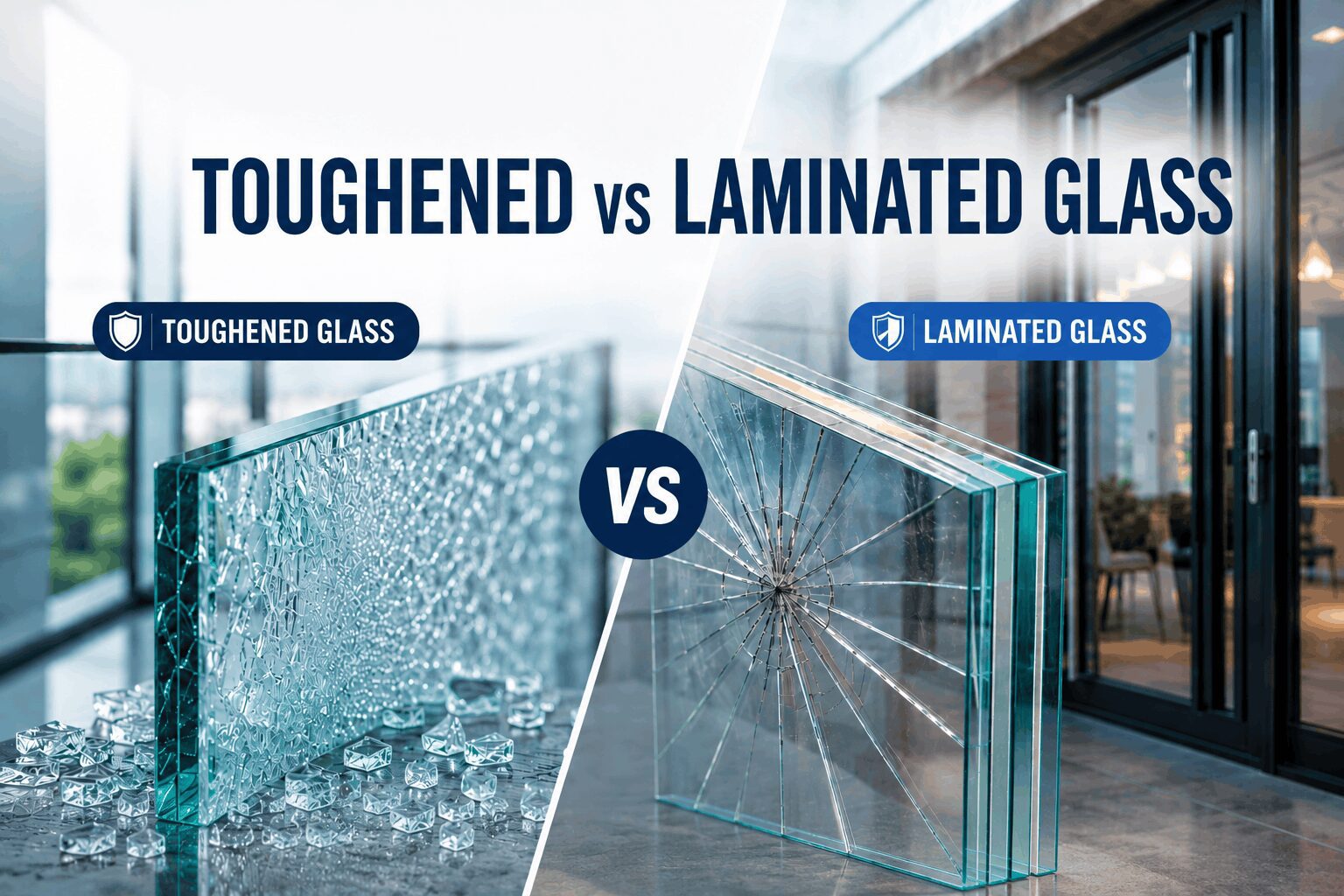
Toughened glass, also known as tempered glass, is a specially treated safety glass that is significantly stronger than standard glass. During manufacturing, the glass is heated to a very high temperature before being rapidly cooled. This process strengthens the outer surface, making the glass up to five times stronger than ordinary glass.
One of its key safety features is the way it breaks. Instead of forming large, sharp shards, toughened glass breaks into small, blunt-edged fragments, reducing the risk of serious injury. This makes it an excellent choice for areas where accidental impact is more likely.
Benefits of Toughened Glass
- Up to five times stronger than standard glass
- Breaks into small, blunt pieces for improved safety
- Excellent impact resistance
- Handles high temperatures and thermal changes
- Low maintenance and long-lasting
- Ideal for modern homes and commercial buildings
What Is Laminated Glass?
Laminated glass is made by bonding two or more panes of glass together with a durable plastic interlayer, typically PVB (Polyvinyl Butyral) or EVA (Ethylene Vinyl Acetate). The layers are permanently fused under heat and pressure to create a strong, secure glazing solution.
Unlike toughened glass, laminated glass remains largely intact if it breaks. The plastic interlayer holds the broken pieces together, preventing dangerous shards from falling away and making it much harder for intruders to break through.
This combination of strength and security makes laminated glass a popular choice for both residential and commercial applications.
Benefits of Laminated Glass
- Remains intact after breaking
- Increased protection against forced entry
- Enhanced home and business security
- Reduces outside noise
- Blocks a high percentage of UV rays
- Helps improve safety by preventing glass from scattering
Toughened Glass vs Laminated Glass
Although both are classified as safety glass, they are designed for different purposes.
Toughened glass is ideal where high impact resistance and thermal performance are required. It is commonly used in shower screens, patio doors, glass balustrades, splashbacks, and aluminium bifold doors.
Laminated glass offers enhanced security and safety. Even after impact, the glass remains held together by the interlayer, making it difficult to penetrate. It also provides improved sound insulation and blocks a significant amount of harmful UV rays.
If security is your priority, laminated glass is often the preferred solution. If you require excellent strength and resistance to everyday knocks, toughened glass is an ideal choice.
How Can You Tell the Difference?
Because both glass types look almost identical, it can be difficult to identify them just by appearance.
The easiest way is to check the manufacturer’s compliance mark, usually located in one corner of the glass.
• Laminated Glass: BS EN 14449
• Toughened Glass: BS EN 12150
If you’re unsure, our experts at Daylight Glazing can help identify your existing glazing and recommend the most suitable replacement or upgrade.
| Feature | Laminated Glass | Toughened Glass |
|---|---|---|
| Manufacturing Process | Two or more glass panes bonded with a PVB interlayer | Heat-treated and rapidly cooled to increase strength |
| Strength | Strong and highly resistant after breaking | Up to 5 times stronger than standard glass |
| Breakage | Cracks but remains held together by the interlayer | Shatters into small, blunt-edged pieces |
| Security | ⭐⭐⭐⭐⭐ Excellent – Difficult to break through | ⭐⭐⭐ Good – Strong but breaks completely when shattered |
| Safety | Excellent – Glass stays in place when broken | Excellent – Breaks into safer fragments |
| Noise Reduction | Excellent sound insulation | Moderate sound insulation |
| UV Protection | Blocks up to 99% of harmful UV rays | Limited UV protection |
| Impact Resistance | High | Very High |
| Energy Efficiency | Excellent when used in double glazing | Excellent when used in double glazing |
| Best For | Front doors, shopfronts, skylights, roof lanterns, security windows | Bifold doors, patio doors, shower screens, balustrades, partitions |
| Cost | Slightly higher | Generally more affordable |
| Typical Lifespan | 20–30+ years | 20–30+ years |
| Maintenance | Low | Low |
| Commercial Use | Widely used for security glazing | Widely used for safety glazing |
| Residential Use | Windows, entrance doors, conservatories, rooflights | Doors, large windows, bathrooms, glass features |
Which Glass Should You Choose?

